Selling to Buying Groups: How to Win When 6–10 People Make the Decision
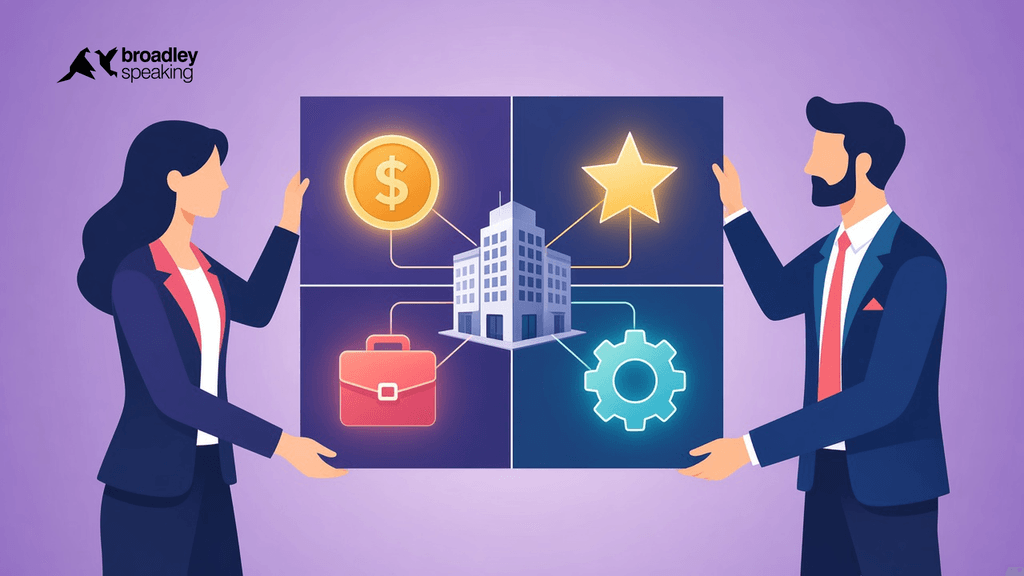
A B2B buying group is the set of people inside one account who influence or approve a purchase. On a complex, high-value deal that group is often 6–10 people, and on some deals it runs larger. Each person has a different job, a different risk, and a different reason to agree.
What is a B2B buying group, and how do you win when 6–10 people influence the deal?
You win by treating the group as the buyer. Map every role that can change the outcome, hold conversations with more than one of them, and give an internal champion the material to defend the decision in meetings you are not in. One engaged contact can look like momentum while the rest of the group chooses another supplier.
For a senior sales leader, the forecast depends on knowing who will actually decide. In the main report I talk about prospect intimacy, and buying groups sit inside that work. A pipeline full of half-known opportunities and reactive tenders is a forecast built on hope. A predictable sales pipeline names the people inside the buying group and shows which of them you have reached.
Who is influencing your deals
The issue:
- One contact looks engaged
- The decision still goes elsewhere
- Internal politics stall progress
- Deals die without feedback
What the insight solves:
Naming the buying group as 6–10 people shows the gap. Teams under-map influence and put too much weight on one role.
Leadership relief:
"We are missing people."
Why sales and marketing miss the same buying group
The issue:
- Sales says the marketing leads are not ready
- Marketing says sales does not follow up
- Attribution debates go nowhere
- Accountability blurs
What the insight solves:
Sales and marketing need to influence the same buying group at the same time. Several touchpoints carry the deal, and credit is shared because the decision is shared. A handoff from one team to the other means some of the group never hear from you.
Leadership relief:
"This is a structure problem."
Why value gets diluted as the deal progresses
The issue:
- Early conversations are strategic
- Later stages become a cost comparison
- The original case gets thinner
What the insight solves:
Buyer enablement keeps the case intact. You help buyers justify the decision internally, support the work of building consensus, and give them answers that hold up after they sign. The value from the first conversation stays in the deal.
Leadership relief:
"We need to equip buyers to carry the decision."
How to shape opportunities before they arrive as tenders
The issue:
- Opportunities appear suddenly
- Timelines sit with the buyer
- The forecast reacts to whatever lands
What the insight solves:
Buyer intent, early signals, and intelligence-led pipeline development strategies put timing back with you. You see a buying group forming, and you enter while the criteria are still open.
Leadership relief:
"We can see opportunities forming, and we can act before a tender lands."
How to reduce risk in large buying-group deals
The issue:
- Large deals feel exposed
- Decision-makers stay cautious
- Internal justification is slow
What the insight solves:
Engaging the full buying group early cuts late-stage surprises, raises confidence inside the account, and makes conversion easier to forecast.
Leadership relief:
"Risk falls when influence is visible."
How to engage B2B buying groups
Selling to buying groups comes down to three moves: map the roles, multi-thread the account, and enable the internal champion.
Map the roles
An ideal buying group map names every seat that can change the outcome, including people you have not spoken to yet. Write down who can approve, who can block, who will use what you sell, and who has to live with the cost.
Typical seats in a group of 6–10:
- An economic buyer who owns the budget
- A technical or operations lead who has to make it work
- A user or department head who lives with the current problem
- Procurement, who will compare cost and terms
- An internal champion who wants the change and will argue for it
- A sceptic who will raise risk, security, or the cost of switching
Ask the first contact who else has to agree. Check that list against LinkedIn and earlier conversations. The map is ready when you can name the economic buyer, the user, and at least one person who can block the deal.
Multi-thread the account
Multi-threading means a live conversation with more than one role, close together in time, so the deal has more than one path.
- Match the message to the role. Finance hears payback and risk. Operations hears implementation and disruption. Users hear the problem you remove from their week.
- Use more than one channel. Voice, email, and LinkedIn reach different people in the same group. Structured outreach keeps those touches on a cadence.
- Record who you have spoken to and who is still silent. One thread means one point of failure.
- Put sales and marketing on the same account list. Account-based marketing strategies keep one message across the group.
Enable the internal champion
The champion has to win the meeting you are not in. Give them material they can forward as it stands:
- A one-page case: the problem, the change, and the cost of waiting
- Answers for the questions finance, procurement, and the sceptic will ask
- A short note on which role usually raises which objection
- A clear next step they can propose internally
Practical sales execution support is what makes those conversations hold when the champion is challenged. A qualification process tells you whether this group can buy, and whether your champion can move it.
What senior leaders should take from this
B2B decisions on complex deals are made by buying groups, often 6–10 people with different priorities, risks, and internal pressure.
- Missing people is how influence leaves the deal. When only one or two stakeholders are engaged, the decision happens elsewhere. Mapping and engaging the full buying group is part of high-value selling.
- The pipeline should follow how the group buys. Buyers move between validation, justification, and consensus. A straight-line stage model hides that movement and produces late surprises.
- Value holds when the buyer can justify it internally. Deals stall when the champion lacks the facts and the confidence to sell the decision inside the account. Buyer enablement protects the case after the first meeting.
- Sales and marketing work the account together. Influence builds across touchpoints and channels. Separate stages slow the group and blur who owns the next step.
- Early contact sets the criteria. Teams that read intent signals and engage early shape the brief, keep a live conversation beyond procurement, and forecast against named people.
- Visibility lowers risk on large deals. A large opportunity feels exposed when you can see only one thread. Engaging the buying group early removes unknown blockers and shortens the path to a decision.
How Broadley Speaking helps with complex buying groups
Winning complex B2B buying groups takes targeted account engagement, clear qualification, structured outreach, and sales execution that stands up with more than one role.
At Broadley Speaking, we help organisations across the buying journey:
- Account engagement through ABM that keeps one message across stakeholders
- Clear qualification that shows which buying groups can actually buy
- Structured outreach programmes so early contact reaches more than one seat
- Practical sales execution support that improves conversations and stakeholder influence
When these work together, organisations see fewer late surprises and forecast from a named buying group.
Frequently asked questions
What is a B2B buying group?
A B2B buying group is the set of people inside a customer account who influence or approve a purchase. It includes the budget holder, the people who will use what you sell, the functions that can block it, and anyone who has to defend the choice internally.
How many people are usually involved?
On complex, high-value B2B purchases the buying group is often 6–10 people. Some deals run larger. Simpler purchases sit with fewer people. The number that matters is how many people can change the outcome on this deal, which you only know once the account is mapped.
How do you engage them?
Map each role, then multi-thread. Speak to more than one person, with a message matched to what that role has to defend. Equip an internal champion with a short internal case, answers for finance and procurement, and a next step they can propose. Keep sales and marketing on the same account so the group hears one story.
Written by Brooke Pinkney - Managing Director - Broadley Speaking
More insights
How to get past gatekeepers in B2B sales without burning trust. State a clear purpose, use named-account context, and open multi-channel paths to decision makers.
Brooke Pinkney

Use a B2B buying matrix to map every decision maker's role and priorities, then multi-thread outreach so deals stop stalling on one contact.
Brooke Pinkney