Culture Under Pressure
Organizational culture isn't something you can implement once and forget. It's the DNA of your business—woven through every decision, interaction, and moment of pressure. When times get tough, culture shows its true colors.
Watch the WebinarWhat Culture Really Means
Culture is like mist—you can't always see it, but it's everywhere. It's not on posters, mouse mats, or in mission statements. It's in every corridor conversation, every decision about reward, and every moment when someone challenges the status quo.
Culture is what happens when no one is looking. It's the muscle memory of your organization—the patterns people fall back on when under pressure. When crisis hits, people don't act according to what's written on the wall. They act according to the culture that's been built through daily actions and behaviors.
The Core Principles
1. Culture Can't Be Outsourced
You can't ask consultants to define your culture. They can facilitate, but culture must come from within. It requires:
- Ownership at all levels: Not just from leadership, but from everyone who understands they have influence
- Translation into daily actions: Taking abstract values and making them meaningful in everyday work
- Time and investment: Culture isn't built in a day or measured quarterly—it's an ongoing commitment
2. It Starts with Reflection, Not Imposition
Before you can build culture, you need to understand what's already there. Every organization has a culture—even if it's not the one you want. The process involves:
- Reflection: Understanding what culture your people actually want and value
- Representation: Ensuring leaders model the behaviors consistently
- Realization: Creating joint understanding of the culture you're building together
3. Culture Must Support Strategy
Culture doesn't follow strategy—it enables it. You need healthy, understood culture before you can successfully implement strategic change. Organizations that try to transform without addressing culture first often find their initiatives failing despite good intentions.
Building Culture Under Pressure
Start Small, Not Big
You don't need a massive transformation program. Start with small, meaningful actions:
- Have conversations without an agenda—truly listen to understand
- Model the behaviors you want to see, especially when it's hard
- Make decisions that align with your values, even when they have short-term disadvantages
Psychological Safety is Essential
People need permission to:
- Experiment and play with new ways of working
- Make mistakes and learn from them
- Have difficult conversations without fear of blame
- Challenge the status quo constructively
Focus on Connection, Not Control
Culture thrives on:
- Intimacy: Getting to know how things really work and who's around you
- Dialogue: Constant conversation about what matters, why it matters, and how targeted customer engagement strengthens long-term relationships
- Kindness: Treating people as humans first, even when making tough decisions
The Leadership Challenge
Leaders set the tone, but culture belongs to everyone. Key principles:
- Show up consistently: Your actions speak louder than any values statement
- Have courageous conversations: Address behaviors that don't align with your culture, even when it's uncomfortable
- Provide focus: In uncertain times, give people guardrails and clarity, and ongoing sales enablement training to help teams direct their energy effectively.
- Be human: Acknowledge that building culture is messy, exhausting, and requires ongoing attention
When Culture is Tested
Culture reveals itself most clearly under pressure. When you're:
- Facing budget cuts or organizational change
- Dealing with high-stakes decisions
- Navigating uncertainty and fear
- Experiencing rapid growth or contraction
That's when you'll see whether your culture is strong enough to hold together while building a resilient sales pipeline during periods of uncertainty. If people show up, support each other, and make decisions aligned with your values—even when it's hard—you know your culture is working.
Practical Steps Forward
- Acknowledge what's already there: Don't start from scratch—build on what exists
- Have the conversations: Spend time understanding what people value and why they stay
- Model consistently: Ensure leadership at all levels demonstrates the culture daily
- Measure what matters: Focus on behaviors and outcomes, not just metrics
- Start small: Pick one area, one team, one behavior—and focus there first
Remember: Culture isn't a destination. It's a journey that requires constant attention, reflection, and action. When done right, it becomes the foundation that enables everything else your organization wants to achieve.
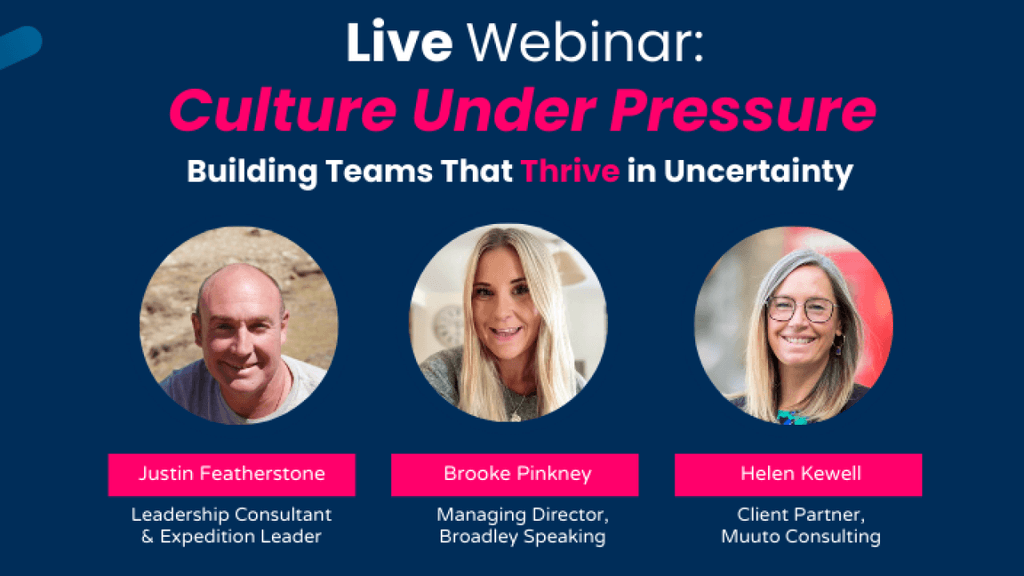
This article is based on insights from our webinar featuring Brooke Pinkney, Helen Kewell (Partner at MUT), and Justin (Leadership Consultant). Watch the full discussion above for deeper insights into building culture under pressure.
Written by Brooke Pinkney - Managing Director - Broadley Speaking
More insights
Trade shows create opportunities — but only if you follow up. Learn why post-event contact is essential for turning conversations into pipeline.
Isabel Robson

The evolution of Account-Based Marketing (ABM) from traditional marketing to a more strategic approach.
Brooke Pinkney